


India’s history is not just something you read about in your textbooks. In Varanasi, you can see it in its temples, streets and traditions that have continued for centuries along the banks of the Ganges. Also known as Kashi or Banaras, the city has been a centre of religion, culture and learning for a long time.
Back in the 7th century CE, Chinese Buddhist monk Xuanzang visited Kashi during Emperor Harsha’s reign. He described a city stretching about three miles along the Western bank of the Ganga, with busy markets, Hindu temples, and learned scholars. Later, in the 11th century, scholar Al-Biruni also wrote about India’s intellectual traditions and the knowledge preserved by Hindu scholars.
But to grasp Varanasi, you don’t need to go back to history books. You can witness Ganga Aarti, explore narrow alleys and ancient temples, and taste local delicacies. And if you want to see something more than the famous sights, then here are some things to do in Varanasi that you might want to add to your bucket list.
Best Things to Do in Varanasi
You can do a lot in Kashi, so if you’re planning a trip to Varanasi, here are some places and experiences you shouldn’t miss.
1- Join Ganga Aarti at Dashashwamedh Ghat
Spend your evening at the Ganga Aarti at Dashashwamedh Ghat. In Hindu tradition, the Ganga is revered as a goddess and is associated with purification and spiritual renewal. During the aarti, priests perform prayers with large lamps, incense, and conch shells while devotees gather along the river.
The ghat’s name comes from the Sanskrit words dash (ten), ashwa (horse), and medh (sacrifice). According to Hindu tradition, Lord Brahma performed a ten-horse sacrifice here to welcome Lord Shiva to Kashi. This is a religious legend, not a historically verified event.
2- Visit Shri Kashi Vishwanath Temple
Shri Kashi Vishwanath Temple is one of the must-visit places for a traveller heading towards Kashi. The temple is devoted to Lord Shiva and, according to Hindu mythology, is one of the twelve Jyotirlingas. For the pilgrims, it is not only a symbol of their faith but also an integral part of Varanasi.
However, the temple’s history also reflects the changing political landscape of India. It was demolished and rebuilt several times over the centuries. According to the official Kashi portal, Queen Ahilyabai Holkar of Indore built the present temple structure in 1777. In 1835, Maharaja Ranjit Singh donated about a tonne of gold to plate two of the temple’s three domes.

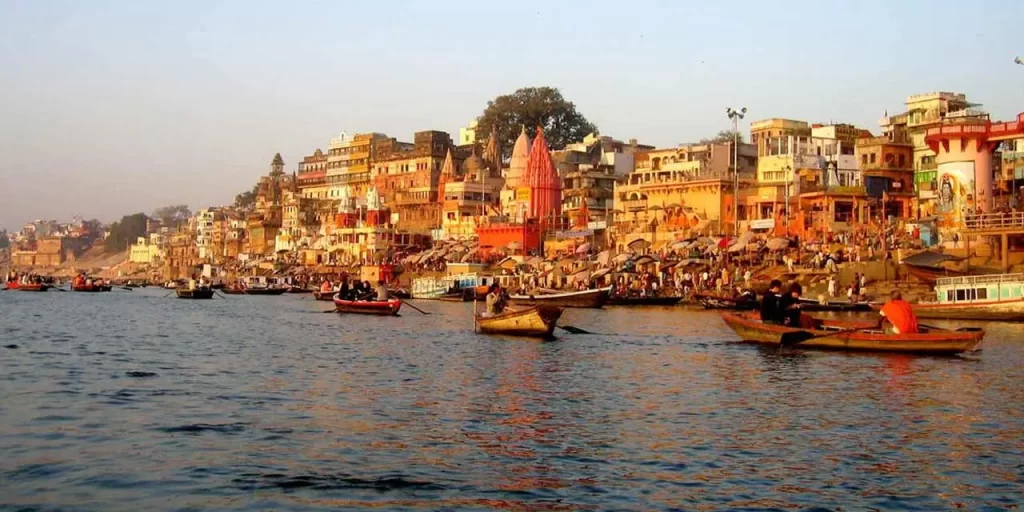
3- Ghat Hopping in Varanasi
The ghats are central to Varanasi’s identity, but their history goes beyond religious ceremonies. The city’s official tourism portal lists 88 ghats, many of which were rebuilt after 1700 under the patronage of Maratha rulers and other royal families.
Assi Ghat
Located near the confluence of the Assi River and the Ganga, Assi Ghat is associated with religious legends involving Goddess Durga. It is also known for Subah-e-Banaras, a morning programme featuring prayers, Vedic hymns, music, and yoga.
Manikarnika Ghat
Manikarnika is one of Varanasi’s principal cremation grounds. According to Hindu mythology, Goddess Parvati’s earring, or manikarnika, fell here. The ghat is closely associated with Hindu beliefs about death, rebirth, and moksha, or liberation from the cycle of rebirth.
Harishchandra Ghat
Another important cremation ghat, this one is named after a legendary king, Harishchandra, who is praised in Hindu mythology for his honesty and devotion. Not only that, but the ghat was renovated in 1740 by Narayana Dikshit, a guru of the Peshwas.
Panchganga Ghat
This ancient ghat is considered to be the meeting point of five rivers. Apart from the religious importance, the place holds a piece of history with its old-world structures on either side of the ghats.
Dashashwamedh Ghat
Apart from hosting the famous Ganga Aarti, this ghat is associated with the legend of Brahma’s ten-horse sacrifice. Its proximity to Kashi Vishwanath Temple has helped make it an important gathering point for pilgrims.
4- Visit Banaras Hindu University
Kashi has historically been a centre for Indian illuminaries. While its halcyon days are long gone, traces still remain. One such example is the Banaras Hindu University. Pandit Madan Mohan Malaviya founded it in 1916, and it’s still one of India’s biggest residential universities.
There you can see the New Vishwanath Temple (Birla Temple) and Bharat Kala Bhavan. The campus museum features miniature paintings, sculptures, textiles, and manuscripts, all of which showcase the city’s rich heritage.
5- Try Varanasi’s Staple Foods
One of the best things to do in Kashi is to try the food here. What do you mean you visited Kashi and you didn’t try their food?
Here is a list of some food that you must try:
- Kachori Sabzi and Jalebi: Head to Kachori Gali near Vishwanath Gali
- Lassi: Pehelwan Lassi near BHU’s Lanka area and there is this place called Blue Lassi Shop; we must say you go there and try their lassi.
- Malaiyo: Try it roughly between November and February.
- Tamatar Chaat
- Banarasi Paan: This is something that you should never forget to eat.
Take a Piece of Kashi With You
“काशी के कण-कण में शिव हैं।” This beautiful saying shows how deeply Lord Shiva is connected to Kashi and the people who live here. Even Mark Twain once said that Benaras is older than history, older than tradition, older even than legend. And indeed, your trip to Varanasi will begin with your very first steps there – from watching the sunrise over the Ganga to aarti in the evening, from visiting ancient temples to exploring Sarnath. Every visit to this city leaves its mark, be it Kashi or Banaras. So, take your time, taste the local cuisine, get lost in the alleys of this ancient city and plunge into the beauty of the place and its people.
FAQ:
Is 3 Days enough in Varanasi?
Three days let first-time visitors cover the main ghats, Kashi Vishwanath, an aarti and Sarnath at a comfortable pace, and add a sample itinerary.
Is it possible to touch the Jyotirlinga in Kashi?
Yes, you can touch the Jyotirlinga in Kashi, but only on certain days and timings. However, it is not possible during the peak hours when the darshan queues are open.
How much does VIP Darshan cost in Kashi Vishwanath?
The VIP Darshan in the Kashi Vishwanath Temple, also called Sugam Darshan, costs around ₹300 per person.