

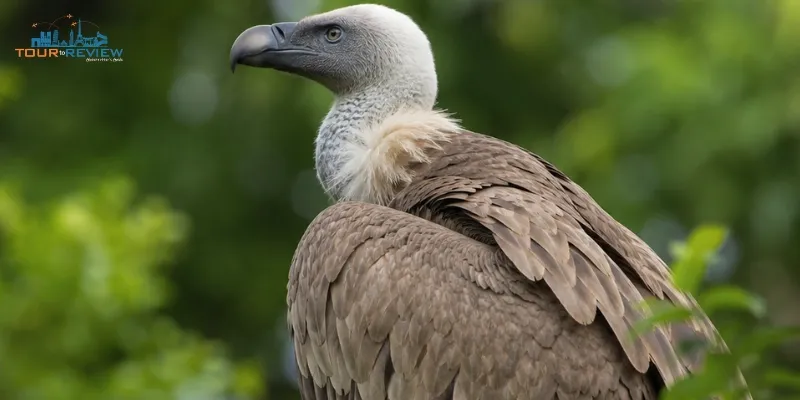
You must remember that in your childhood, you saw vultures as common birds flying overhead, but today, even spotting an Eagle is considered rare. But this is actually a serious issue, as every species, bird, or animal is important for the life cycle. If any of them becomes extinct or poses a threat, it will harm the entire ecosystem.
Today, we will be talking about one of these species: the vulture, how they are important to the environment, and the reasons for the declining vulture population in India.
Significance of Vultures in the Ecosystem
As we have already discussed above, every bird, every species, is very important for the growth of the world and a better environment. Let’s see why the vultures are important for us and the ecosystem.
Vulture plays an important part in the life cycle, a term which we have learned in childhood, that every species in the environment is important. Vultures play a role as nature’s scavengers, as it feeds on dead animals to keep the environment clean.
Have you ever wondered what would happen if a dead animal stayed in the environment for the longer period of time and no animal was there to feed on it? Obviously, this will raise various health issues and concerns as it will spread diseases and bacteria. That’s why vultures are very important for the environment and for the health and safety of every being living on Earth.
Decline of the Vulture Population
There could be many reasons for the declining population of vultures in India. If we look at the reports, India has experienced the fastest decline in vulture population ever recorded; it declined by 95% of the total population during the 1990s to early 2000s. The major reason for the decline of vultures was the drug diclofenac, which was commonly used for livestock.
When the vultures were feeding on the dead livestock, this dangerous drug was directly affecting the kidneys, causing sudden death. As a result, the vulture population in India declined drastically.
Vulture Species Found in India
India is home to multiple species, so there are a total of 9 vulture species found in India. But out of them, only 3 species were mostly affected, which were:
- White-rumped Vulture
- Indian Vulture
- Slender-billed Vulture
Due to the sudden decline of these 3 species, they are now considered endangered, as they are very rare to find these days. The conservation took a step to prevent the extinction of these vultures.
Vulture Population in India
In recent years, the vulture population of India has shown stabilisation, with the help of government intervention and conservation efforts. The ban on the drug diclofenac has reduced the deaths of vultures. Also, habitat protection and breeding centres have contributed to the gradual recovery of some species.
Many people visit the safari to see endangered species, including vultures, but due to the declining vulture population, they return disappointed.
Many experts believe that the vulture population in India has reached far below historic levels, although exact numbers are not specified as they vary by species and region. But challenges such as habitat loss, poisoning, and food scarcity continue to threaten these birds.
Challenges Vultures Face Today
We live in a country where even after several warnings and awareness, people do not stop doing the things which they were told not to. Despite various campaigns and efforts, people were still using harmful drugs and chemicals. Due to this, there was a decline in the vulture population in India, as these illegal, harmful veterinary drugs were destroying the habitat of vultures.
These challenges make it necessary to continue conservation efforts and to regularly monitor the health of vultures in India.
Future of Vultures in India
To prevent the extinction of vultures, we must be very careful about how we treat the environment and the species that depend on it. As we have already seen, how important vultures are for the ecosystem. It is important for every individual to take collaborative efforts and initiatives for the future survival of the vulture population in India.
We have already seen how important vultures are, but if the same thing continues, then we can face the extinction of the birds. So, for the future survival of the vulture population in India, it is necessary to take collaborative efforts. Spreading more awareness and taking strict actions against those who are breaking the rules should become a necessity.
Any individual interested in learning about the conservation of vultures can help by working with wildlife organisations or by raising awareness of these birds.