

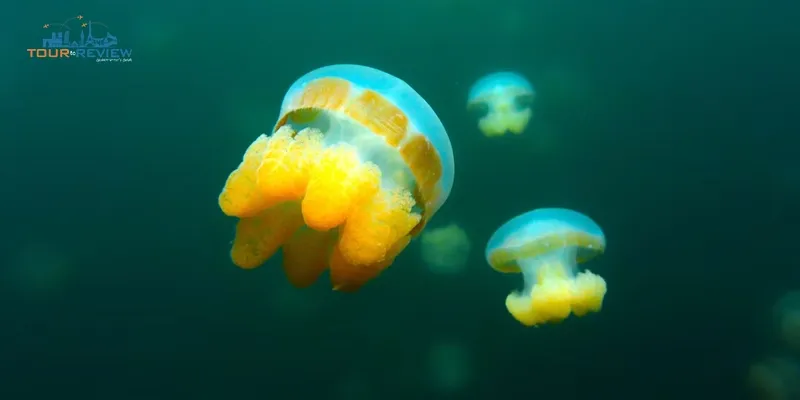
Swimming in clear blue-green water surrounded by thousands of golden jellyfish floating gently all around you is a sight to behold. They drift right past you and follow the sunlight like a peaceful underwater dance. It feels like something out of a movie, but it is real! You can experience this magical spot at the Palau Jellyfish Lake.
Located on Eil Malk Island in Palau, this amazing lake is a dream destination for travellers, swimmers and nature lovers.
In this blog, we’ll cover everything you need to know to plan the perfect Palau Jellyfish Lake tour, including price details and what to expect on your trip.
What Makes the Palau Jellyfish Lake So Special?
Locally known as Ongeim’l Tketau, this isolated lake is millions of years old. Long ago, natural rock shifts trapped a population of golden jellyfish inside a quiet limestone basin.
Because they were cut off from the open ocean, these creatures changed over time in a really cool way:
- No Natural Predators: with no big sea creatures around to eat them, they didn’t need strong defences anymore.
- Safe to Swim with: they lost their harmful stings over thousands of years; while they technically have stinging cells, they are completely harmless to humans. This makes swimming at the Palau Jellyfish Lake a totally safe and worry-free experience.
- Sun followers: The jellyfish get their energy from algae growing within them. For the algae to flourish, thousands of jellyfish move around the lake every day, following the sun.
Is the Palau Jellyfish Lake Dead?
If you’ve been reading about this trip online, you might have seen scary headlines asking “Palau Jellyfish Lake Dead?”
No, it is not dead! However, its jellyfish population does fluctuate because of the weather.
Here is how the weather affects the Palau Jellyfish Lake:
- Extreme weather: Hot weather causes the lake water to heat up.
- Temperature Spikes: When the water gets too warm, the jellies lose their algae food source.
- Population Drops: The number of jellyfish goes down significantly.
- Rest and Recovery: Local authorities temporarily protect the lake so nature can heal, and the jellyfish population bounces back!
This happened in 1998 and 2016, leading locals to briefly close the area so the lake could recover.
Thanks to strict protection and constant monitoring by local marine experts, the jellyfish always return. Today, the Palau Jellyfish Lake is open, healthy, and ready for visitors.
Best Time to Visit and What to Expect
Palau has warm, sunny weather all year, but the best time to visit the Rock Islands and Palau Jellyfish Lake is from November to April. During these dry months, the water is calm and super clear! It’s best to go on a morning tour because that’s when the jellyfish move toward the sunlight and are most active, making it perfect for taking photos.
A typical Palau Jellyfish Lake tour starts with a fun speedboat ride through Palau’s stunning green islands. When you arrive, you’ll take a short, easy walk up and over a wooden path to reach the lake.
Most guided tours cover everything you need, including:
- Boat rides and a friendly local guide
- Snorkel gear and a quick safety talk
- Extra stops at nearby coral reefs and beaches
You’ll be swimming among the jellyfish for around 30 to 60 minutes, giving you ample time to enjoy this wonderful place without risking the safety of these creatures. A number of visitors even turn this activity into a day-long affair by visiting lagoons and stunningly white-sand beaches along with this lake.
Palau Jellyfish Lake Price
Palau focuses on eco-friendly tourism to keep its nature clean and beautiful. Because of this, visitors pay a few fees that directly support local nature protection.
Here is what you can expect for the Palau Jellyfish Lake price:
| Expense Type | Cost (USD) | What’s Included |
| Koror State Permit | $100 per person | Valid for 10 days. It covers both the Rock Islands and Jellyfish Lake. |
| Full-Day Guided Tour | $90 to $220 per person | Depends on the tour company. Usually includes boat rides, snorkel gear, lunch, and a guide. |
Ready to Swim? Final Snorkelling Tips Before Your Trip
To keep this beautiful place safe for future visitors, everyone must follow a few simple environmental rules:
- Reef-Safe Sunscreen Only: Regular sunscreen has chemicals that hurt marine life. Use only certified reef-safe sunscreen, and put it on at least 30 minutes before jumping in.
- Look, Don’t Lift: Never take a jellyfish out of the water! Their delicate bodies need water pressure for support and can easily break apart if lifted into the air.
- No Scuba Diving: Scuba diving is strictly banned in the lake. The deep bottom layer of water has toxic gas, so shallow surface snorkelling is the only safe way to explore.
- Sign the Palau Pledge: When you arrive in Palau, you’ll sign an official eco-pledge stamped right into your passport, promising to respect the islands during your visit.
Swimming gently alongside millions of golden jellies is an unforgettable, peaceful experience. If you’re ready to see one of nature’s greatest wonders. And the fun fact is you don’t even need a visa to visit Palau. The Palau Jellyfish Lake is waiting for you!
Frequently Asked Questions
Which Country is Palau?
Palau is an independent sovereign island nation located in the western Pacific Ocean. It is part of the larger region of Micronesia and consists of over 340 islands.
What is the Secret of the Palau Lake?
Palau’s famous Jellyfish Lake holds millions of golden jellyfish that lost their potent stings over thousands of years due to having no natural predators, making safe swimming possible.
Is Palau a rich or Poor Country?
Palau is considered a relatively wealthy Pacific island nation with a high standard of living, driven mainly by tourism and financial aid.
